Beaverton and Washington County
Bathroom Tile Installation in Beaverton, OR
Choosing tile for a bathroom floor or shower? Tell us about the room and a local contractor will follow up.
Good tile work starts underneath the tile
Tile is what you see, but how long it lasts depends on what it sits on. A cracked floor tile, a hollow sound underfoot or grout that keeps crumbling usually points to a problem in the layers below, not the tile itself. Getting the base, waterproofing and layout right is most of the job, and the visible part goes quickly once those are done.
This page explains those layers and the choices you will make about tile, grout and floor heat. We are a referral service for Beaverton and nearby Washington County. When you send a request, we pass it to an independent local contractor, who looks at your floors and walls, talks through options and provides the written estimate.
From the subfloor to the sealer
Bathroom tile is a system of layers, each with a job. These five topics run from the bottom up: the base and waterproofing, the tile itself, how it is laid out and sloped, how the joints are finished, and the option of heating the floor.
Substrate and waterproofing
Tile needs a stiff, flat base. On a wood-framed floor, that means a solid subfloor with little bounce, since flex is what cracks tile and grout. Cement board or an uncoupling membrane is installed over it to give the tile a stable surface. On walls, cement board or foam board goes up in place of standard drywall in wet areas.
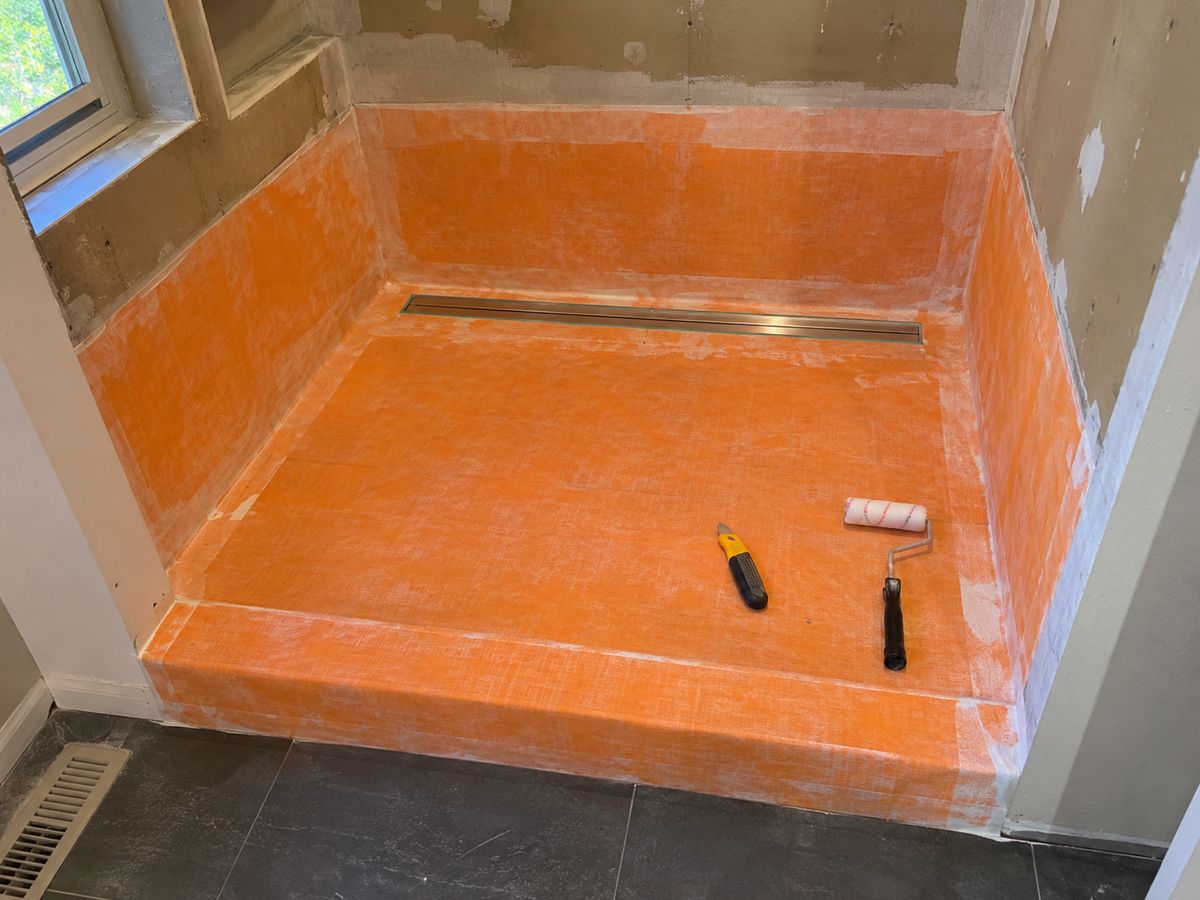
In the shower and anywhere water collects, a waterproofing layer sits under the tile. It can be a liquid applied membrane, a bonded sheet or sealed foam panels. On a bathroom floor outside the shower, some contractors waterproof the whole floor, which is worth asking about if the room has a history of overflows.
Tile types and sizes
Porcelain is dense, absorbs very little water and suits floors and showers. Ceramic is softer and lighter, and many ceramic tiles are made for walls. Natural stone such as marble, slate or travertine looks distinctive but needs sealing and gentler cleaners. Glass tile is common in accents and needs a specific setting material.
Size changes the work. Large format tile means fewer grout lines but needs a very flat base, since any dip shows as a raised edge. Small tile and mosaics bend around the slope of a shower floor and offer more grip, but take longer to set. Plank tile usually needs an offset pattern chosen to avoid uneven edges.
Layout and slope to drain
Layout is planned before the first tile is set. The contractor finds the center lines of the room or wall, decides where cut pieces will fall and tries to keep thin slivers away from doorways, the vanity front and the shower entry. Lining up grout joints between the floor, walls and niche gives a cleaner result.
In the shower, the floor must slope evenly toward the drain so water never pools. A center drain needs the floor sloped from four sides, which works best with small tile. A linear drain allows a single slope across the floor, so larger tile can be used. Getting slope right happens in the layers below the tile.
Grout and sealing
Cement grout is the traditional choice. It comes sanded for wider joints and unsanded for narrow ones, and it usually needs sealing to resist stains. Epoxy grout and some premixed urethane or hybrid grouts resist stains and water better and do not need sealing, though they can be harder to work with.
Grout color matters more than people expect. A shade close to the tile hides small variations, while a contrasting color highlights the pattern and shows dirt sooner. Corners where walls meet each other or meet the floor or tub are usually finished with flexible caulk instead of grout, since they move slightly. Ask how often your grout or stone will need resealing.
Floor heat under tile
Electric floor heating uses thin cables or mats set under the tile and controlled by a thermostat on the wall. It makes a cold tile floor comfortable underfoot and helps the room dry faster after showers. It is installed before the tile goes down, so it has to be decided during planning.
Floor heat needs a dedicated electrical circuit in most cases, with ground fault protection, and that typically calls for an electrical permit. The heating mat is usually laid only where people stand, not under the vanity or toilet. A programmable thermostat lets the floor warm up before you wake. The contractor can check whether your panel has room for the circuit.
Why Request Bathroom Tile Installation Through Us
The base checked first
The contractor we refer you to looks at the subfloor and walls before discussing tile, since the layers underneath decide how long the finish lasts.
Local independent contractors
Your request goes to an independent contractor who works in Beaverton and nearby Washington County communities.
Free to ask, free to decide
Sending a request does not obligate you. The estimate, the tile choices and the agreement are all between you and the contractor.
How bathroom tile goes in
- Check the floor and wallsThe contractor checks the subfloor for bounce, the walls for flatness and the room for signs of past water damage.
- Choose tile, pattern and groutYou pick tile, layout, grout type and color, plus any floor heat, and the estimate lists the base and waterproofing to be used.
- Prepare and waterproofOld finishes are removed, the base is repaired or reinforced, backer and membranes are installed and wet areas are sealed.
- Lay out and set tileCenter lines are marked, heating mats are placed if chosen, and tile is set and checked for flatness and slope.
- Grout, caulk and sealJoints are grouted, corners and edges are caulked, sealer is applied where needed and the surface is cleaned.
Bathroom Tile Installation Questions
Can new tile go over my old bathroom floor?
Sometimes, if the old tile is firmly bonded, flat and the extra height will not cause problems at the door or toilet. Often it is better to remove it so the subfloor can be checked. The contractor can test for loose or hollow tiles first.
Why did my old tile crack?
Cracks usually come from movement below: a subfloor that flexes, a seam in the base, or settling. Replacing only the tile without fixing the cause tends to repeat the problem. The contractor checks the base before resetting anything.
Is large format tile a good choice for a small bathroom?
It can make a small room feel larger with fewer grout lines. It needs a very flat floor and careful layout, and on a shower floor smaller tile usually works better because it follows the slope to the drain.
Do I need a permit for heated floors?
Adding an electrical circuit for floor heat usually needs an electrical permit, and the work is done by a licensed electrician. Which office issues it depends on whether your home is inside Beaverton city limits or in unincorporated Washington County. The contractor can confirm the requirement.
Other Services in Beaverton, OR
- Bathroom Remodel
- Shower Replacement
- Tub to Shower Conversion
- Bathroom Vanity Replacement
- Accessible Bathroom Remodel
- Bathroom Remodel in Beaverton, OR
Towns We Take Requests From
Call for a Free Estimate
Tell us which surfaces you want tiled and how the floor feels today. We will pass your request to an independent local contractor.