Planning guide
Bathroom Remodeling Explained: Scope, Sequence and Cost Drivers
Have a bathroom you want to change? Send the details and a local contractor will reach out.
The first decision is how deep to go
Every bathroom project sits somewhere between new paint and a room stripped to the studs. Where yours lands decides almost everything else: who needs to be on site, whether a permit is involved, how long the room is unusable and where the money goes. Picking that depth on purpose, before you fall for a tile sample, keeps the project from drifting.
This guide walks through that choice, the usual order of work, the factors that make one estimate larger than another, and how permits work around Beaverton. We are a referral service, not a builder. You send a request, we pass it to an independent local contractor, and that contractor visits, sizes up the room and writes your estimate.
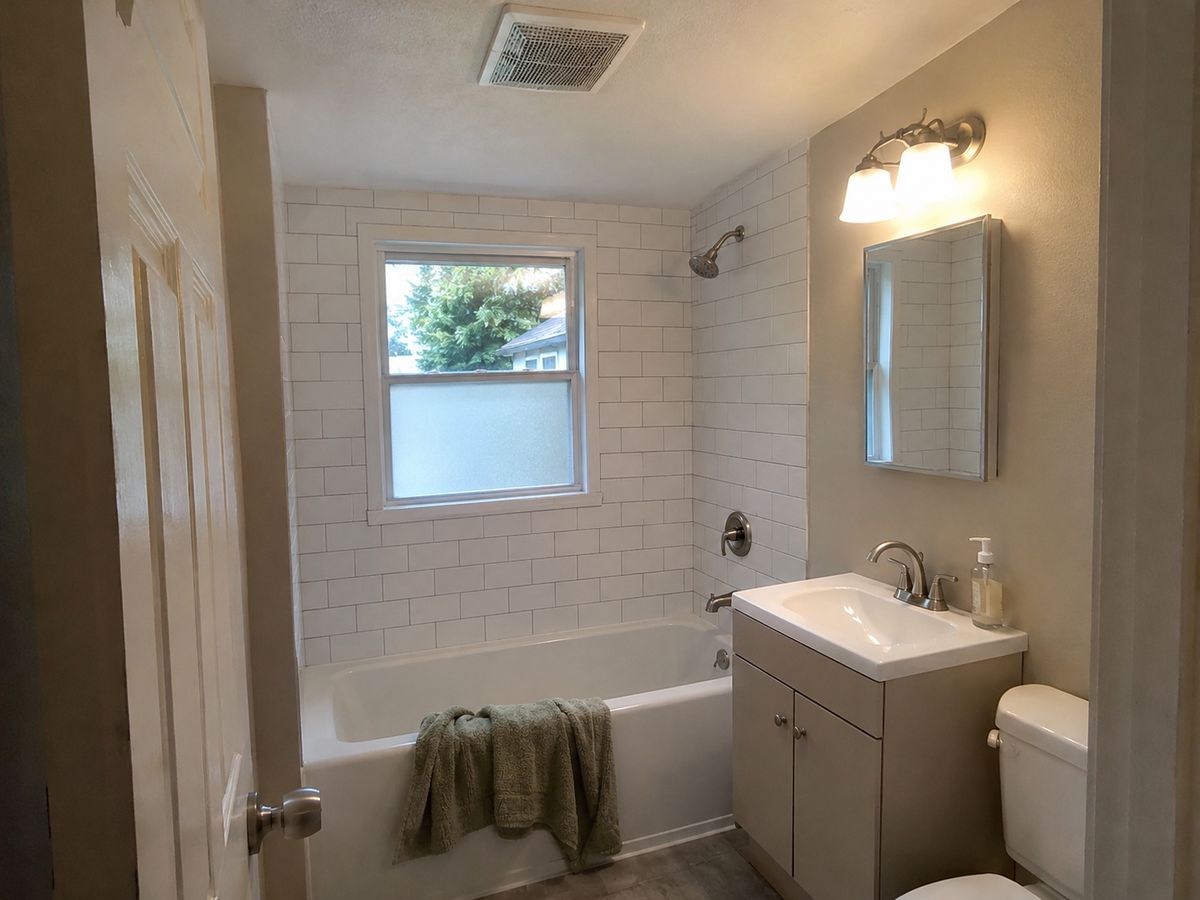
Five things to understand before the first visit
These five topics come up in nearly every bathroom conversation. Reading them first means you can tell the contractor what you want, follow their reasoning when they suggest a different scope, and understand why the written estimate is built the way it is.
Refresh or full gut: drawing the line
A refresh changes what you touch and see while leaving the shell alone: a new vanity and faucet, a toilet, a light, a mirror, paint, maybe a floor. A full gut removes wall finishes, flooring and fixtures so the framing, pipes and wiring can be seen and changed. Plenty of projects land in between, such as rebuilding only the shower.
The line is usually drawn by condition, not taste. Soft spots near the toilet, loose tile, peeling paint above the shower or a fan that never clears the mirror all point to problems behind the surface. If the bones are dry and sound, a refresh can be money well spent. If they are not, a refresh just covers them up.
The order the trades follow
A bathroom is small, but several trades take turns in it, and the order matters. Demolition comes first, then any framing changes. Plumbing, electrical and the exhaust duct are roughed in next while the walls are open. Inspections, where required, happen before anything gets covered.
After that the room closes up: backer board or drywall, then waterproofing in the wet areas, then tile or panels, then paint. The vanity, toilet, trim, lighting and mirror go in last, with shower glass measured once the tile is done. Delays tend to come from one trade waiting on another or on a backordered item, which is why selections are settled early.
What moves the budget
Three things move a bathroom budget more than anything else. The first is how much of the room comes apart, since every layer removed has to be rebuilt. The second is whether fixtures change location, because relocating a toilet flange, shower drain or sink supply means work under the floor and inside walls.
The third is labor intensity in the finishes. A tiled shower with a niche and a bench takes far more hours than a panel system. Small mosaic tile takes more time than large format. Specialty glass, heated floors and added circuits each bring their own line item. What the house hides, like rot or old piping, is the wild card no one can price until it is open.
Permits in Beaverton and Washington County
Your address decides which office issues the permit. Homes inside Beaverton city limits go through the City of Beaverton. Homes in unincorporated Washington County, which covers many neighborhoods with a Beaverton mailing address, go through Washington County Land Use & Transportation. Checking which side of the line you are on saves confusion later.
Swapping a vanity or toilet in place is usually simple. Moving drains, adding circuits, changing walls or rerouting a fan duct is the kind of work that commonly calls for a permit and inspection. The contractor normally applies for it. Ask which permits your job needs and confirm the contractor is licensed with the Oregon Construction Contractors Board.
Planning around one less bathroom
Losing a bathroom is easy to underestimate. In a house with two or more, the main cost is a shared schedule in the other one. In a house with only one, it means planning for the days when the toilet is pulled and the shower cannot be used, and asking whether the toilet can be reset overnight during the longer stretches.
Ask the contractor which phases leave the room fully out of service and which leave it partly usable. Clear a path from the door to the bathroom, decide where materials will be stored, and think about dust in nearby rooms. Pets and small children do better when the work area can be closed off.
Why Request Bathroom Remodel Through Us
Help matching scope to the room
The contractor we pass your request to looks at what is behind the surfaces before recommending a refresh, a partial rebuild or a full gut.
Someone who knows the permit map
Your request goes to an independent contractor working in Beaverton and Washington County, who can tell whether your address answers to the city or the county.
A free request, your decision
Asking costs nothing and commits you to nothing. The estimate, the contract and the choice to go ahead are between you and the contractor.
From first request to a finished bathroom
- Describe the room and the goalYou tell us what bothers you about the bathroom and what you hope to change, and we pass it to a local contractor.
- Walk-through and measuringThe contractor checks for moisture, looks at the plumbing, fan and wiring, and talks through which scope fits the room.
- Scope and selections in writingYou get a written estimate listing what comes out and what goes in, then choose fixtures and finishes so they can be ordered.
- Demolition, rough-in and inspectionThe room is opened, hidden conditions are dealt with, and plumbing, electrical and venting changes are inspected where required.
- Finishes and the punch listWaterproofing, surfaces, fixtures and glass go in, then you and the contractor walk the room and note anything left to finish.
Bathroom Remodel Questions
How do I know whether a refresh is enough?
A refresh fits when the floor is firm, the tile is tight, there are no stains or soft drywall near the shower and the fan clears steam. If any of those fail, ask the contractor to check behind the surface before you settle on cosmetic work.
Who applies for the permit, and with which office?
The contractor usually applies. Inside Beaverton city limits that is the City of Beaverton. In unincorporated Washington County it is Washington County Land Use & Transportation. Your mailing address alone does not always tell you which applies.
Can a bathroom remodel be done in stages?
It can, but plan the stages around the order of work. Anything inside the walls, such as plumbing, wiring, the fan duct and grab bar blocking, is cheaper to do in the first stage, even if new finishes wait until later.
How do I check a contractor in Oregon?
Oregon contractors are licensed through the Construction Contractors Board. Its online search shows whether a license is active and lists bond and insurance information. Look the contractor up before signing, and make sure the name matches the one on the estimate.
Other Services in Beaverton, OR
- Shower Replacement
- Tub to Shower Conversion
- Bathroom Vanity Replacement
- Accessible Bathroom Remodel
- Bathroom Tile Installation
- Bathroom Remodel in Beaverton, OR
Towns We Take Requests From
Call for a Free Estimate
Tell us what you want to change and roughly how the room looks today. We will pass your request to an independent local contractor who will contact you.